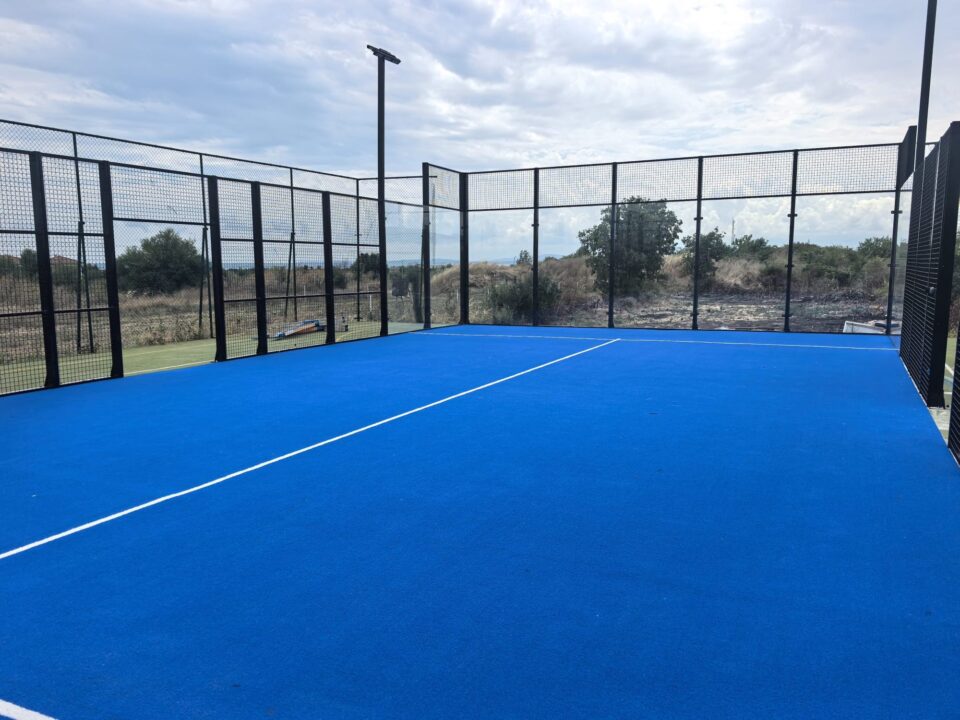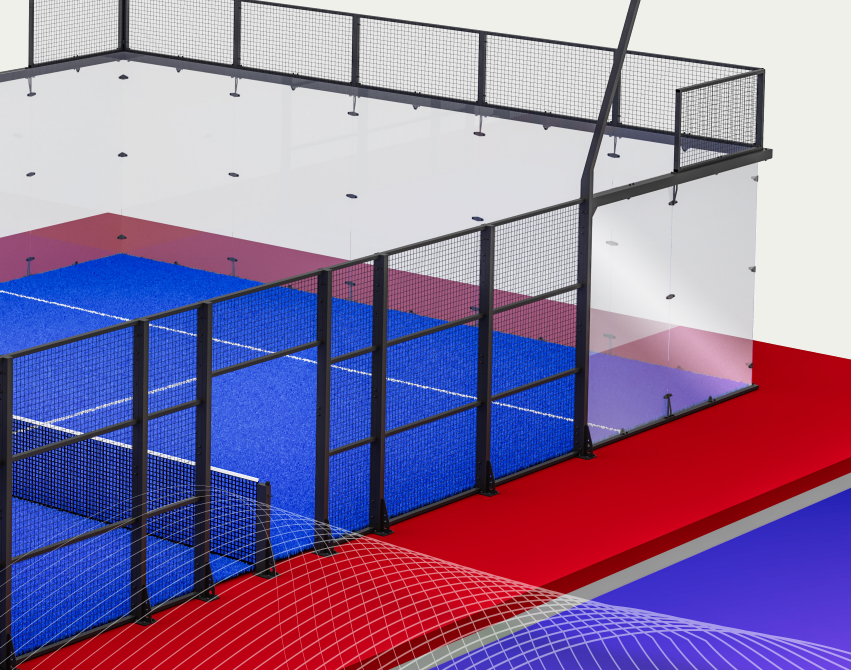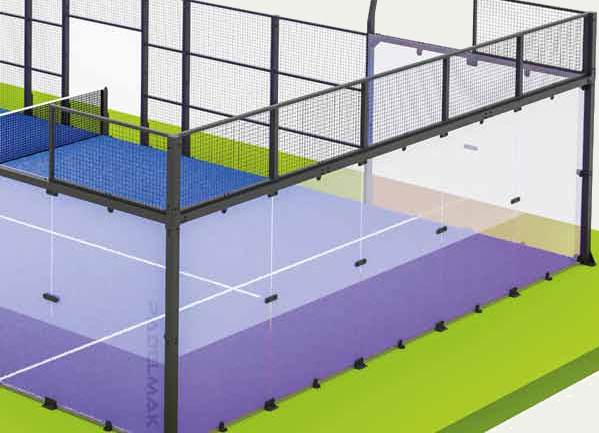
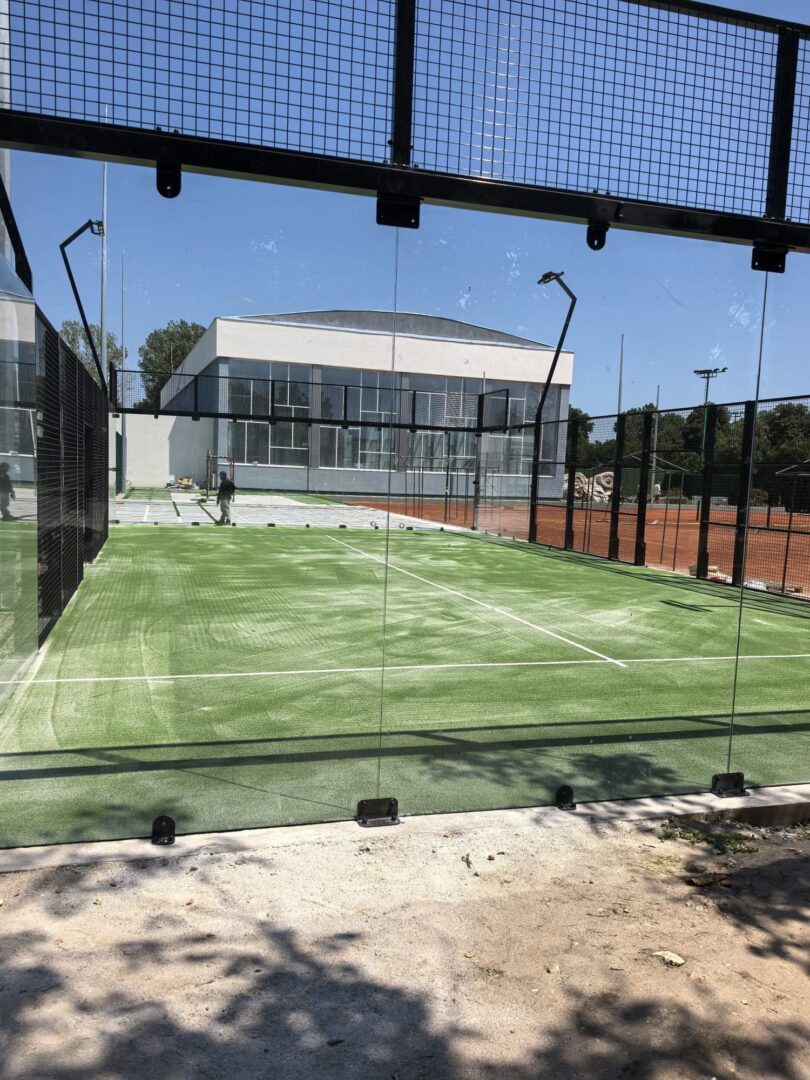
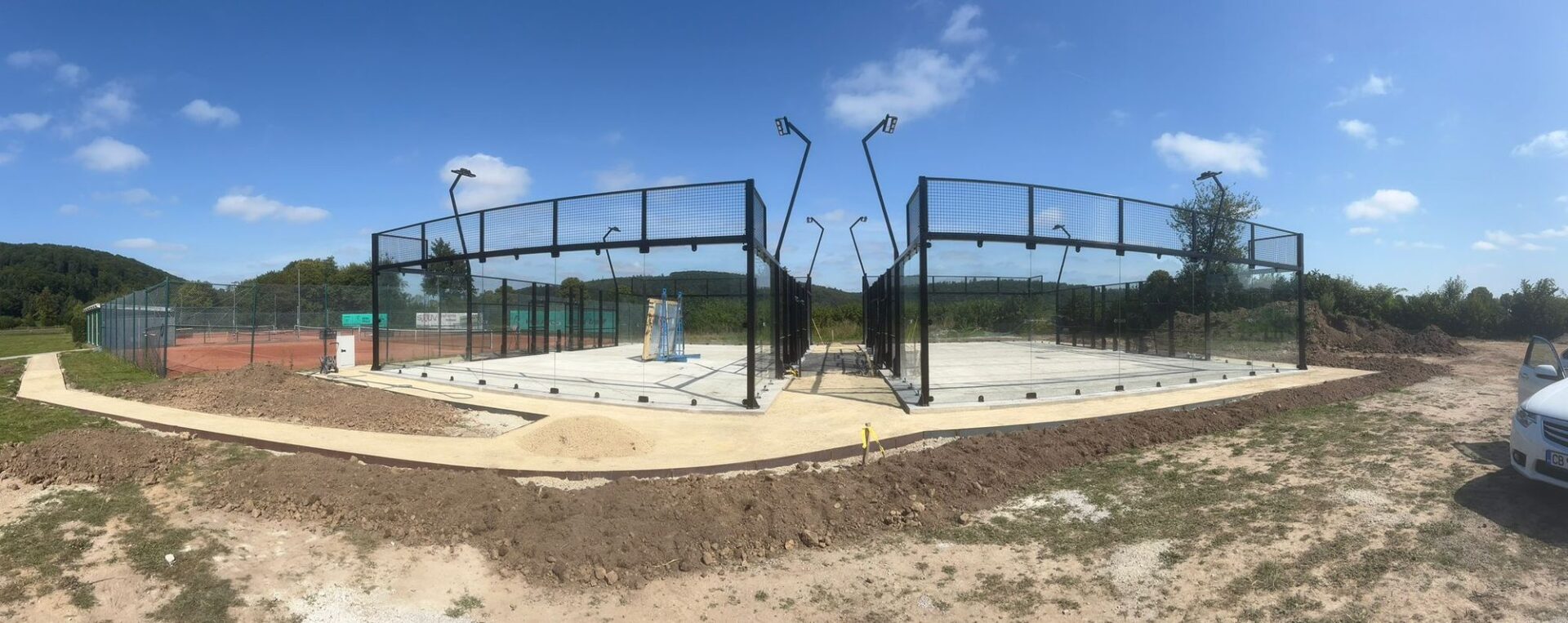
“When will the court be ready?” depends far less on how fast the installation crew works than on where the project waits. What usually stretches the schedule is not production but slab preparation, changes of mind and permits. Below is the route from order to first serve, with the factor that governs each step.
What are the stages of a padel court installation?
| Stage | What happens | What governs the duration |
|---|---|---|
| 1. Survey | Area, ground condition, court count, layout | How quickly information and photos arrive |
| 2. Quotation and contract | Scope fixed, model and options chosen | Decision time, the most common delay |
| 3. Slab | New platform poured or existing slab prepared | Weather and concrete curing |
| 4. Production | Steel structure, glass and components manufactured | Model, court count, production schedule |
| 5. Shipping | Loading and delivery to site | Distance; customs for export |
| 6. Installation | Structure, glass, turf and lighting | Court count, site access, weather |
| 7. Handover | Checks, maintenance briefing, warranty documents |
What really stretches the schedule?
Three things: the slab, the decision and the weather. Pouring the platform and letting it reach strength is the least compressible item; it is planned, not shortened. Second come decisions on the client side: a change of model, an extra court or a change of location sends the project back to the start. Third is weather, which stops both concrete work and installation. Plan those three properly and the rest runs predictably.
How much faster is it with an existing slab?
Considerably. If a sound platform within tolerance already exists, the longest item drops out and the project moves straight to production and installation. This is why tennis court and pitch conversions complete noticeably faster than new builds. Suitability is judged on the age of the concrete, the state of the surface and the difference in levels.
Does the facility have to close during installation?
No; in an operating facility the work is normally phased. The work area is separated, noisy operations are scheduled outside peak hours and an access route is agreed for materials. In hotels and clubs the healthiest approach is to install outside the season or during a low-occupancy period. Access constraints (narrow gates, lifts, positions needing a crane) affect duration directly, so they are noted at survey stage.
What is handed over at completion?
- Check list: dimensions, net height, glass and fixing inspection
- Written warranty: ten years on the steel structure, five on the turf, two on other components
- Maintenance schedule and a short briefing for your site team
- Copies of production and product certificates on request
Tell us your area and ground condition and we will map out the schedule with you.