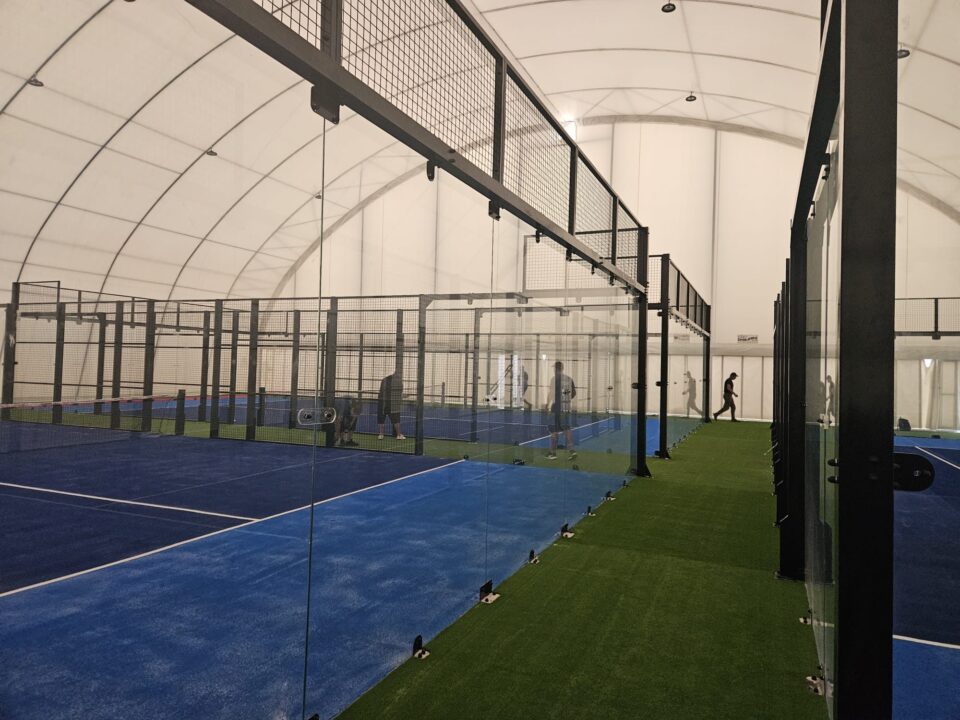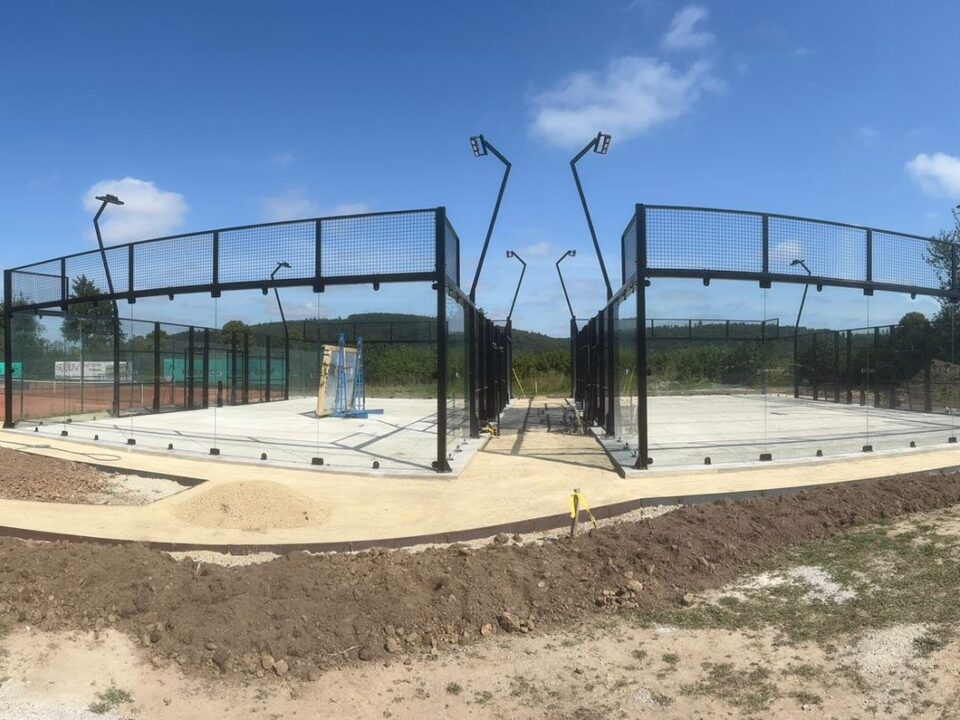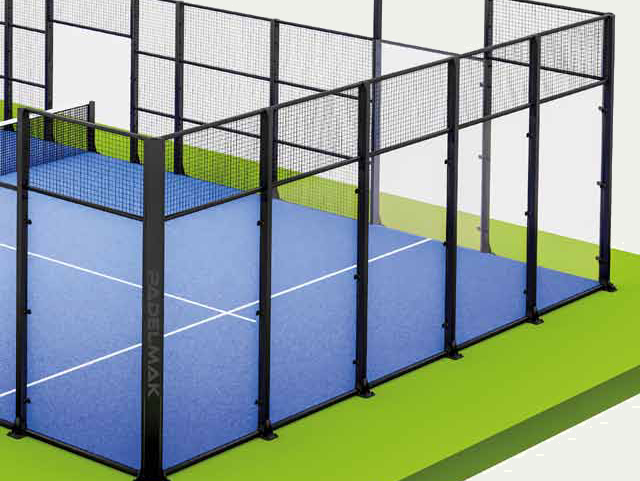
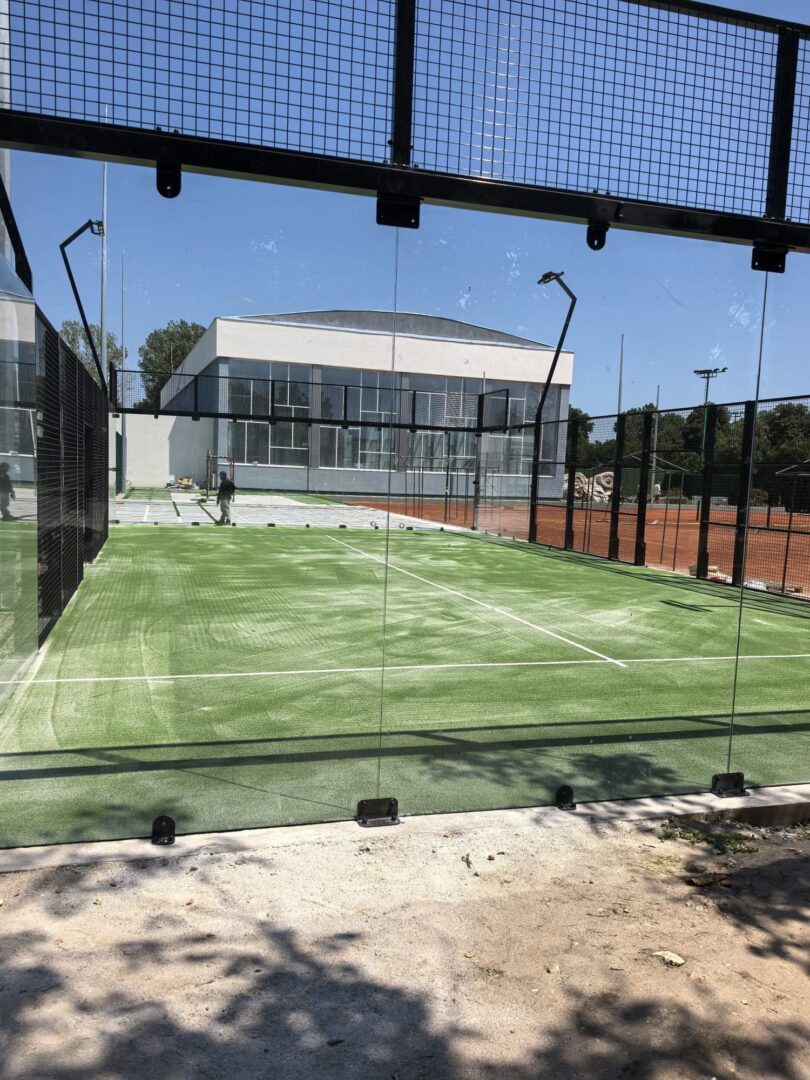
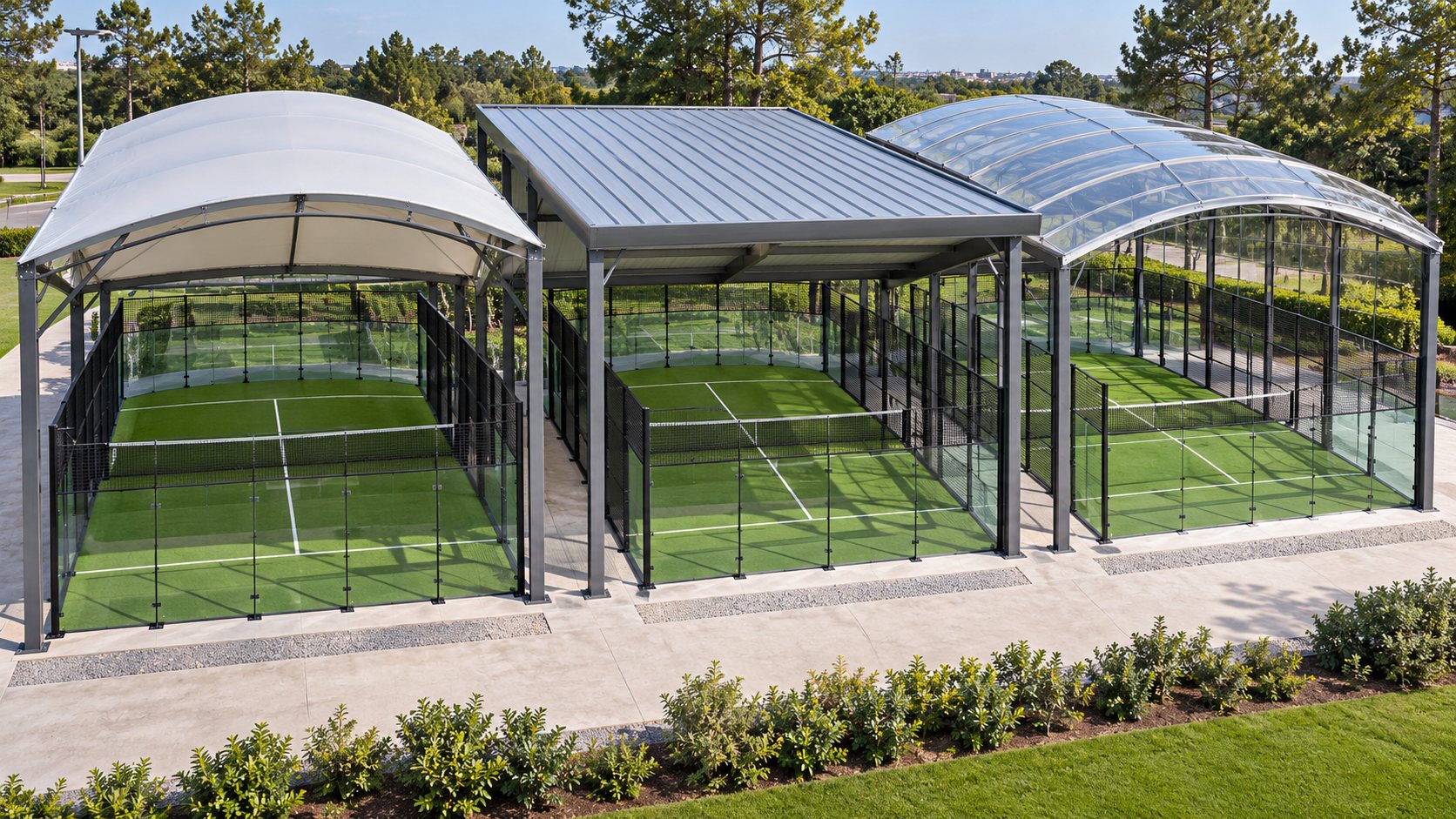
An open court loses its calendar to the weather: rain, snow, wind and extreme heat quietly remove a significant share of the year from your bookings. Covering the court recovers most of that; but “covering” is not one thing. A canopy, a membrane roof, a sandwich-panel roof and a steel structure are very different investments. This article compares them and lists the questions to ask.
What are the options for covering a padel court?
| System | What it offers | What to check |
|---|---|---|
| Canopy / tarpaulin | Fastest and lowest initial investment | Limited life and snow capacity; membrane replacement is a recurring cost |
| Membrane roof | Wide spans, light structure | Fire classification, tension maintenance, local load conditions |
| Sandwich panel roof | Insulation; a step towards a full building | Weight and structural calculation; ventilation becomes essential |
| Steel structure, open sides | Permanent solution, high durability | Snow and wind load calculation; anchorage capacity of the slab |
Can an existing court be covered without demolition?
Yes, when it is planned properly. The roof does not rest on the court structure but on its own supports; you need clearance around the court for those supports and a slab capable of taking the anchorage. Our Roofx system was developed for exactly this case: it is planned over the existing court without dismantling it. The roof structure is produced on the same line as the court, under EN 1090, with welded fabrication to EN ISO 3834-2.
Is covering a tennis court the same job?
No; the span is different. A padel court is 10 metres wide; a tennis court with its run-off areas reaches 17–18 metres. As the span grows, member sections, the number of supports and foundation loads all change; the same solution cannot simply be applied to both. The first question a facility owner searching for a “tennis court canopy” should ask is whether the system has been calculated for their span or taken from a catalogue. See our tennis-versus-padel comparison.
Why do snow and wind loads decide everything?
Because a roof that collapses or lifts is far more expensive than the court beneath it. Snow load varies enormously by region; a system that works on the Mediterranean coast may be inadequate in the east. Wind does not only push down on a roof; it applies uplift, which makes anchorage calculation at least as important as the structural sections. Ask for the snow and wind loads the roof has been designed for in writing; “heavy duty” is not a calculation.
Tell us your court dimensions and location and we will propose a roof designed for your loads.