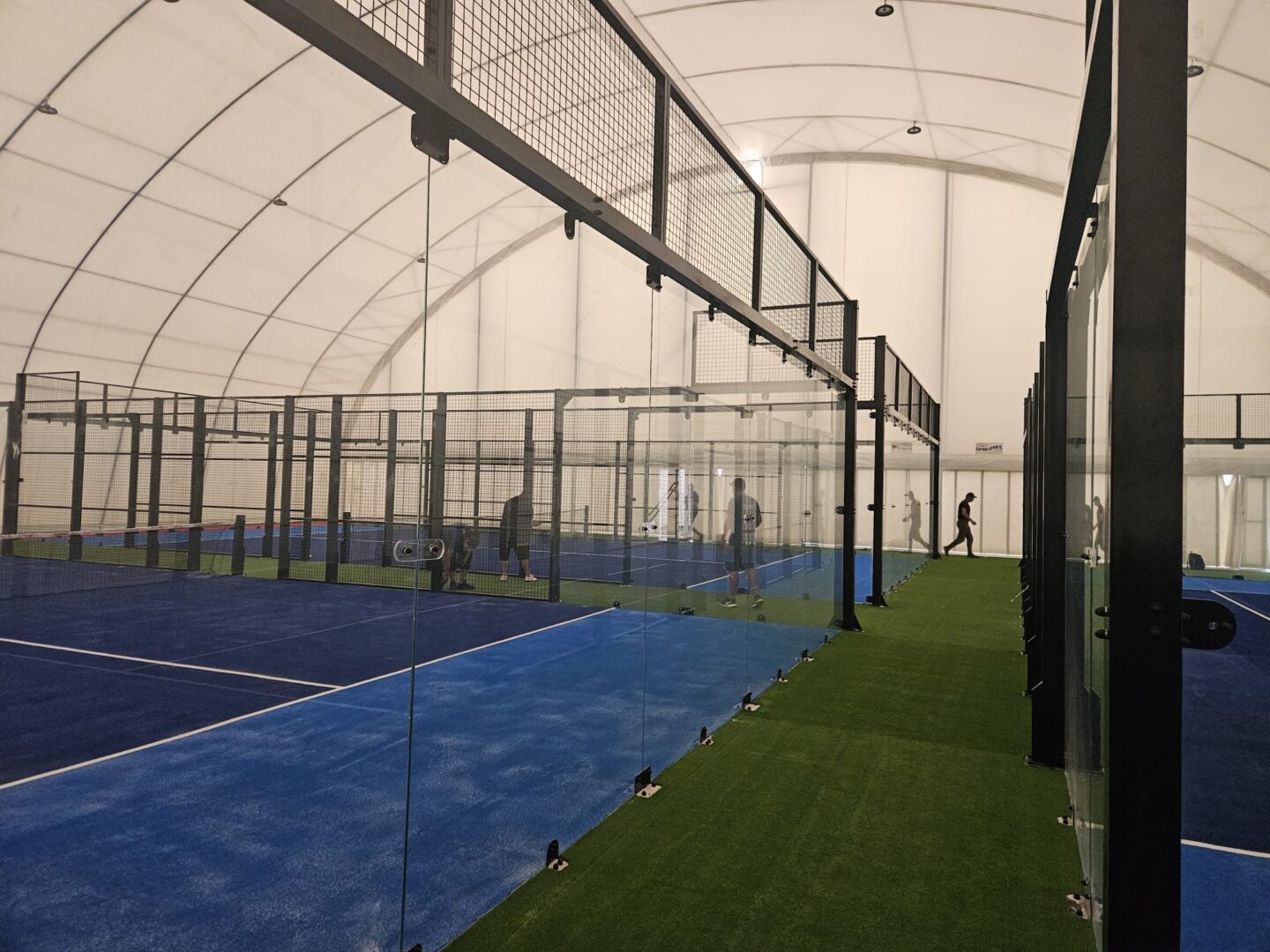
Padel is an evening sport: a court’s most valuable hours begin after dark. That makes lighting a revenue item rather than a comfort item; a poorly lit court cannot be sold in the evening. This article covers the three measures that matter, how pole positions affect play and what to watch on the energy side.
Which three measures matter?
First, illuminance (lux): how bright the court is. Second, uniformity: the difference between the brightest and darkest points. Third, glare control: whether luminaires fall directly in the players’ line of sight. Most quotations discuss only the first, yet a court that meets an average lux figure while leaving the corners dark makes ball tracking difficult. Target values differ for training, club matches and competition, so the intended use has to be stated up front.
Where do the poles go?
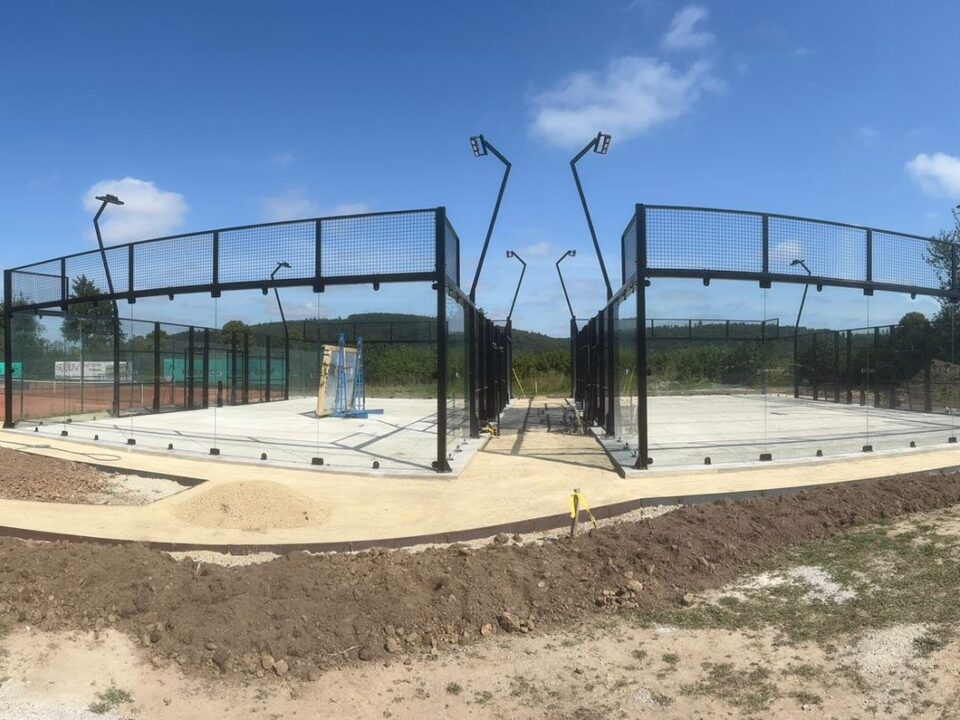
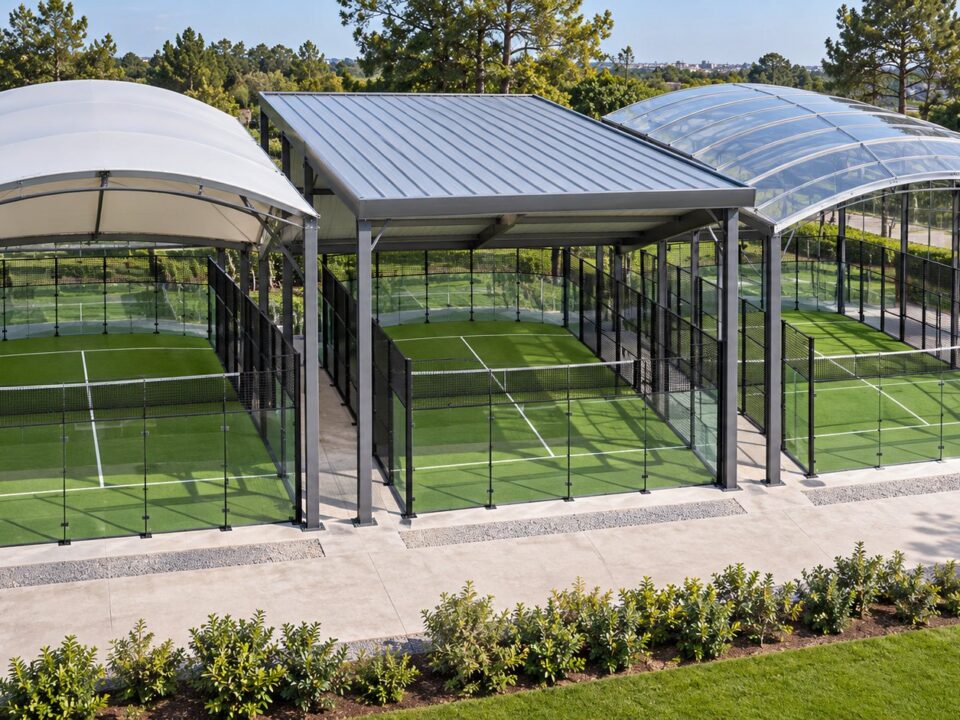
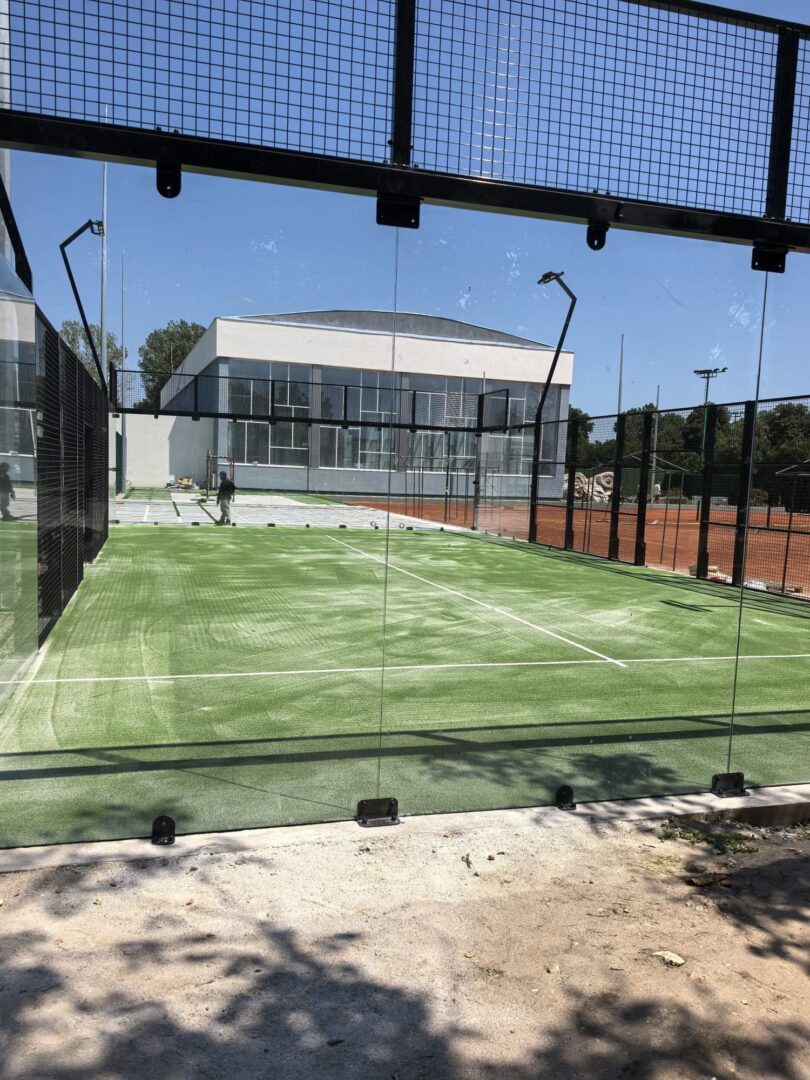
Luminaires are usually positioned symmetrically along the long sides of the court. The aim is even distribution with no shadow. There are two traps: reflections on the glass surfaces, and light piling up at the top of the net area. Pole height follows from the same balance; too low creates glare, too high scatters the light. Indoors the luminaires are ceiling-mounted, and the critical rule is free height: nothing may hang below the 6 metres of unobstructed height the FIP requires.
| Use | Expectation | Critical point |
|---|---|---|
| Training / recreation | Comfortable visibility | Uniformity; corners not left dark |
| Club matches | High comfort | Glare control |
| Competition | High level and uniformity | Flicker-free drivers for camera |
| Broadcast / recording | Camera compatibility | Flicker value |
How is the energy cost controlled?
Lighting is one of the largest operating costs of a court. The way to reduce it is not to cut luminaire output but to design properly; over-specifying is as expensive as under-specifying. Switching courts independently, automation tied to the booking schedule and lights that switch off on empty courts are the most practical measures. Dust on luminaires is a silent loss: periodic cleaning is part of the maintenance schedule.
When should the lighting design be done?
Before the slab is poured. Pole positions, conduit runs and box locations are cast into the platform; changing them afterwards means breaking concrete. That is why lighting is part of the slab specification. If you may add a roof later, say so now; a roof system changes the lighting arrangement.
Tell us how the court will be used and we will prepare the lighting layout.