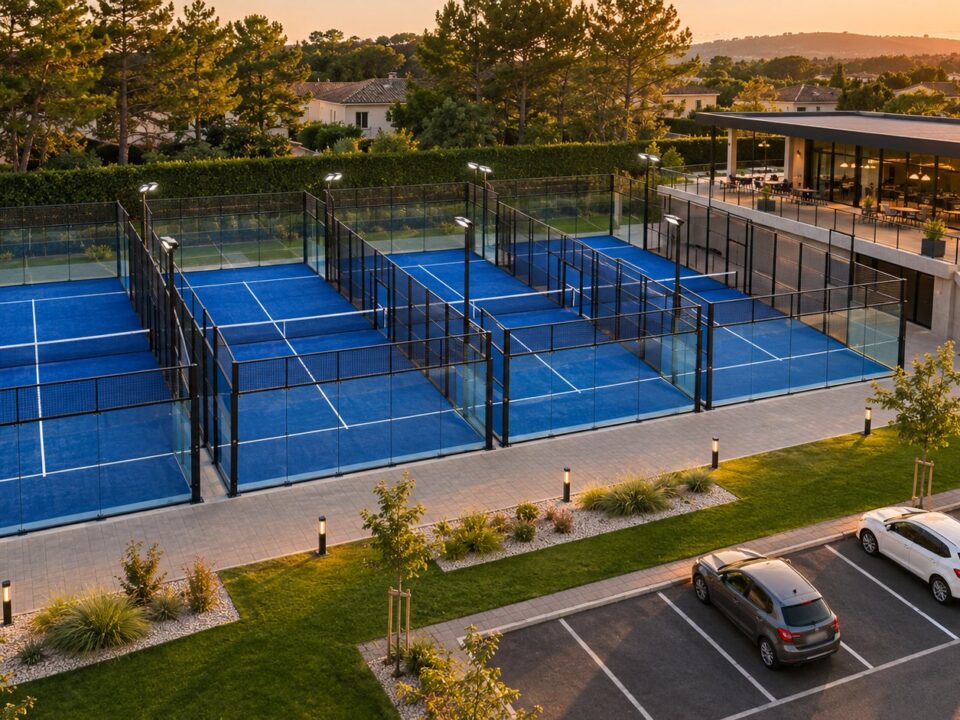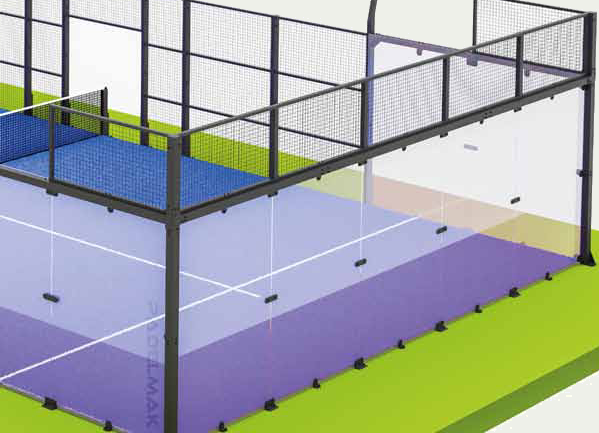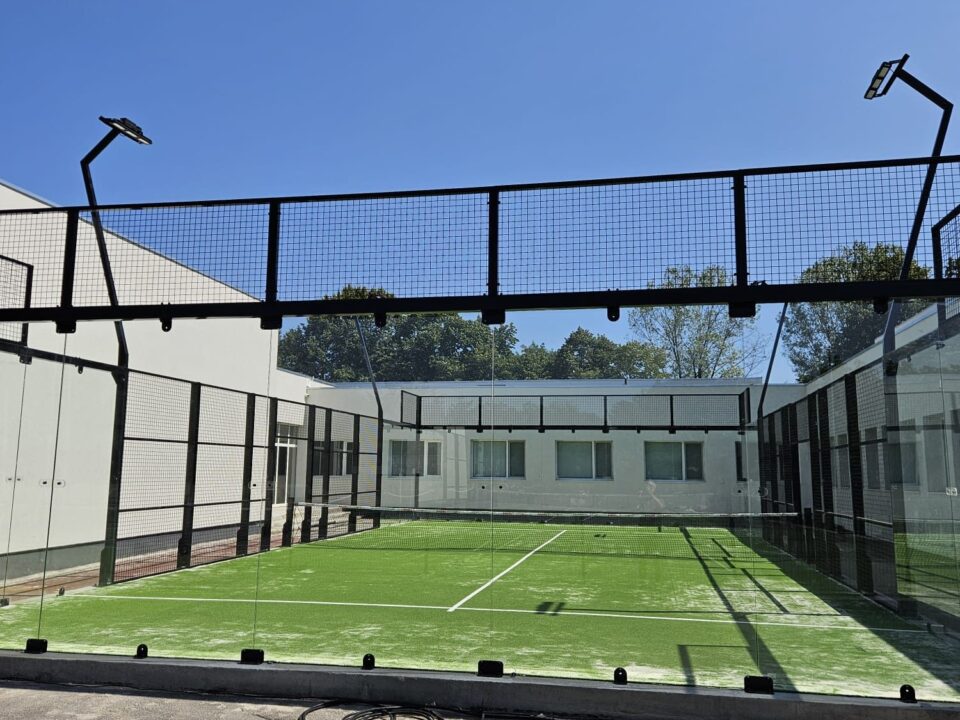
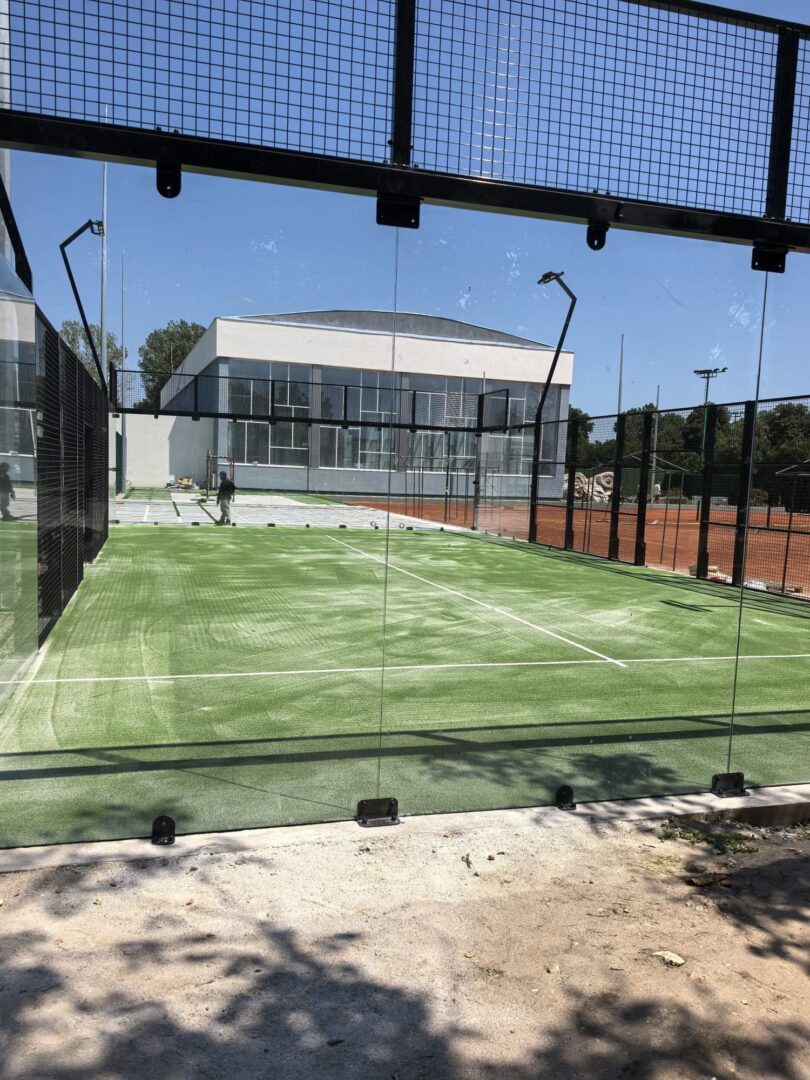
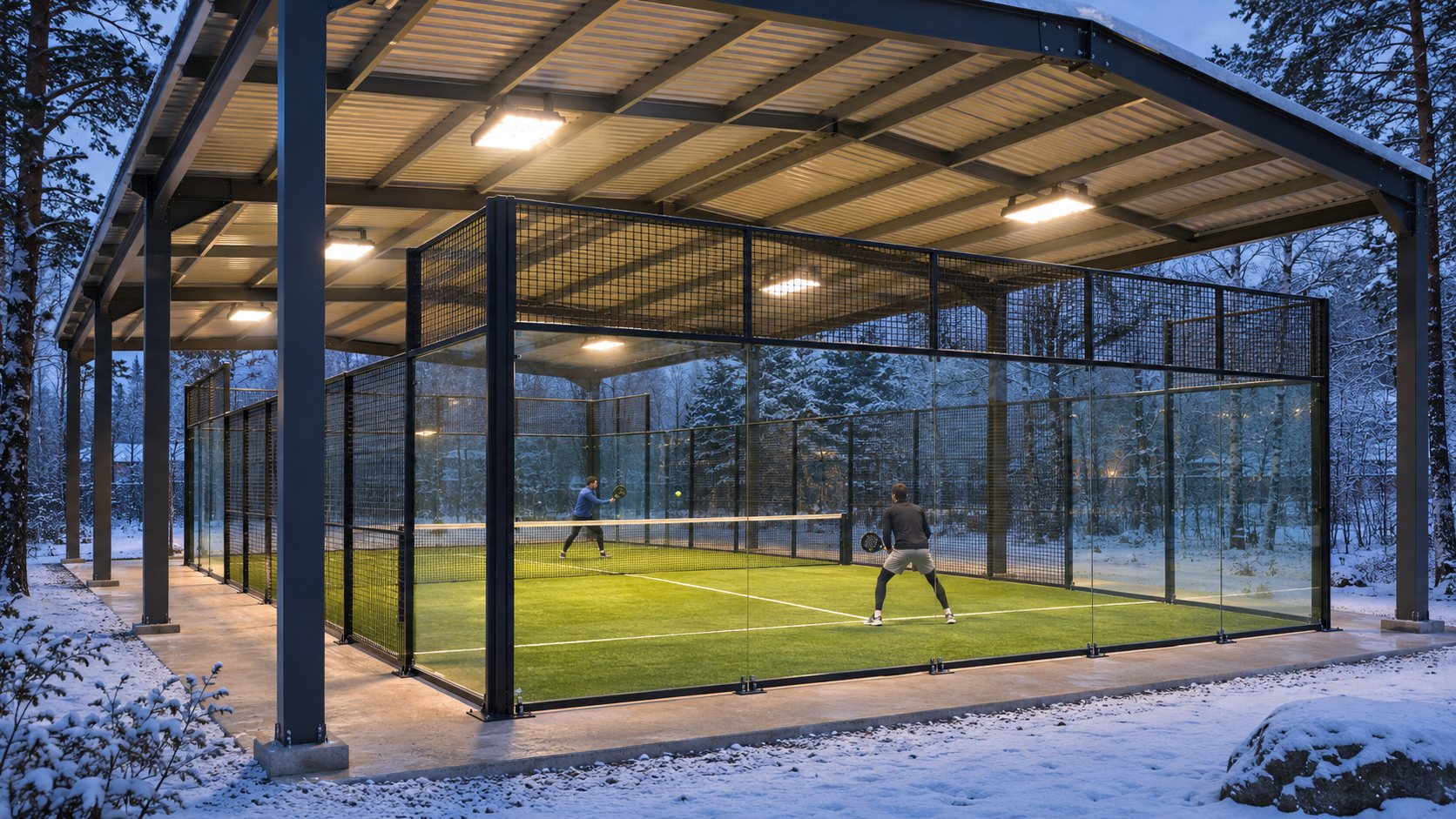
The biggest threat to revenue at a padel facility is not the competition down the road; it is the calendar. A wet evening, a snowy weekend or a fiercely hot afternoon erases the court’s most valuable hours. This article works through the ways to keep a court earning twelve months a year: roof, lighting, drainage and programming.
How many days a year are you losing?
The soundest way to answer is to look back: how many days, and in which time bands, was the court closed last year? In most facilities that number is higher than expected, because losses are not limited to rainy days; drying time after rain, windy evenings and extreme summer afternoons all produce unsellable hours. And the hours lost are not random; they usually fall in the most valuable bands, evenings and weekends.
Four interventions that keep a court running
| Intervention | What it gains | Investment level |
|---|---|---|
| Court roof | Play independent of rain, snow and sun | Medium |
| Full indoor facility | Climate control, winter comfort | High |
| Lighting upgrade | Evening hours sold through short days | Low–medium |
| Drainage and surface care | Court dries quickly after rain | Low |
What keeps players through the winter?
In winter the problem is not only the weather but the habit breaking. A group that stops playing in November does not return by itself in March. So going into winter with leagues, fixed weekly slots and group coaching preserves occupancy even where the court is not physically enclosed. On covered courts the wind is cut and playing comfort rises noticeably; players notice, and choose their facility accordingly.
Roof first, or a second court?
If your prime-time occupancy is already high, a second court makes sense; you are turning demand away. But if the court closes often because of weather, a second court simply doubles the same lost days. In that case the sound order is to cover the court first and add courts once occupancy is proven. The revenue formula is set out here.