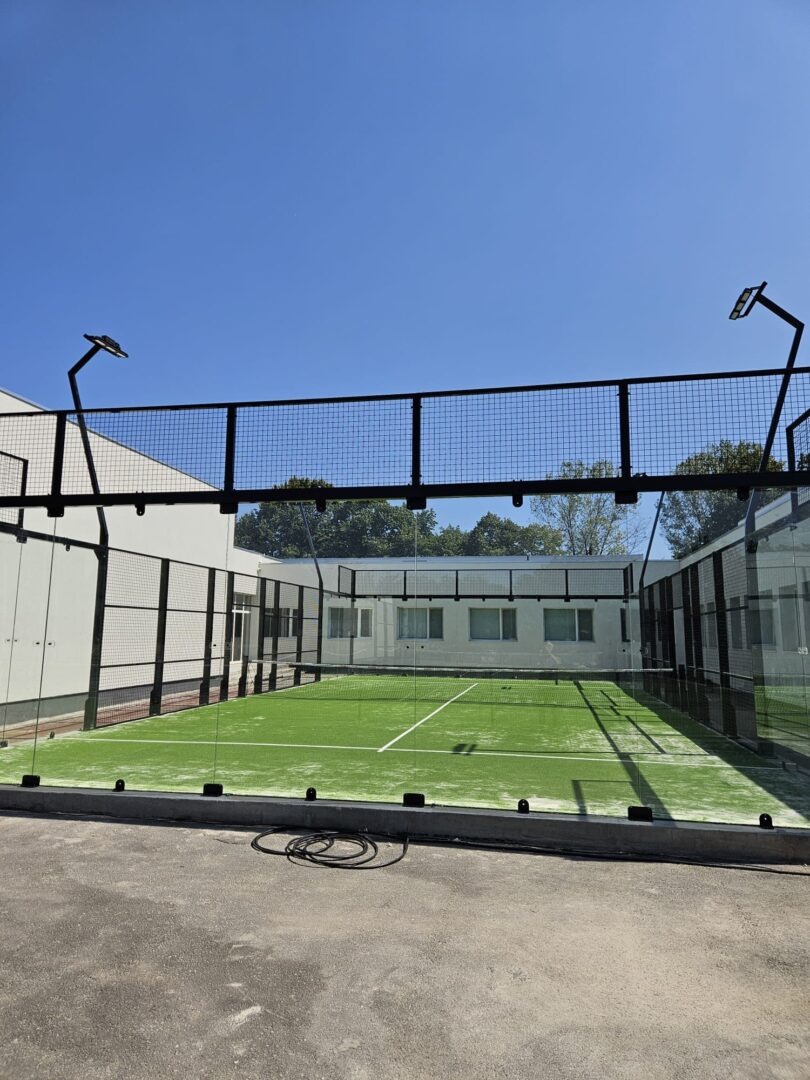
Padel has become one of the fastest-spreading facility investments in hospitality. The reason is simple: a court is a visible amenity that extends the time a guest spends on the property and influences the booking decision. This article covers what a hotel investor needs to settle before committing: area, season, operating model and revenue.
Why does padel work in hotels?
Three reasons. The learning curve is low: unlike tennis, a guest can play on day one, which keeps the court busy. It is a four-player game, so families and groups play together and it fits naturally into an activity programme. And it needs a small area: a 20 × 10 metre court takes less than half the footprint of a tennis court, so it does not consume the landscaping.
Where on the property should it go?
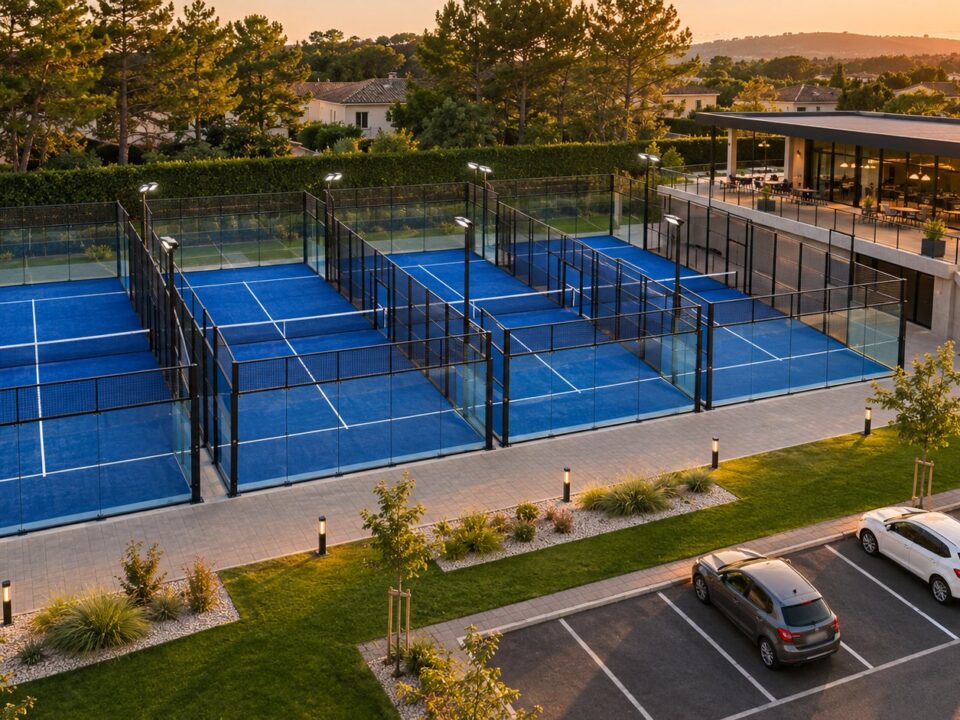
Beyond the 20 × 10 metre playing area you need clearance for installation and circulation; in practice at least 12 × 22 metres of level ground. Three things drive the position: distance to room façades (evening play carries sound), lighting that does not shine into rooms, and easy access from the pool or lobby. Reusing a car park area or an idle tennis court is very common; two padel courts fit into one tennis court footprint.
| Hotel type | Main role of the court | Key decision |
|---|---|---|
| Seasonal resort | Guest experience, activities | An open court may be enough |
| Year-round resort | Experience + external sales | A roof makes a real difference |
| City hotel | Memberships, corporate use | Terrace or car park area reused |
| Boutique / villa hotel | Differentiating amenity | Single court, panoramic model |
How does the court generate revenue?
Through four channels: hourly rental, coaching, memberships sold to non-guests, and tournaments or events. On top of these sits a contribution that is harder to measure but real: the difference the court makes in your marketing and on the booking page. In all-inclusive properties the court is usually free to guests; there the metric is not revenue but time on property and guest satisfaction. The cost side is broken down here.
Which model suits a hotel?
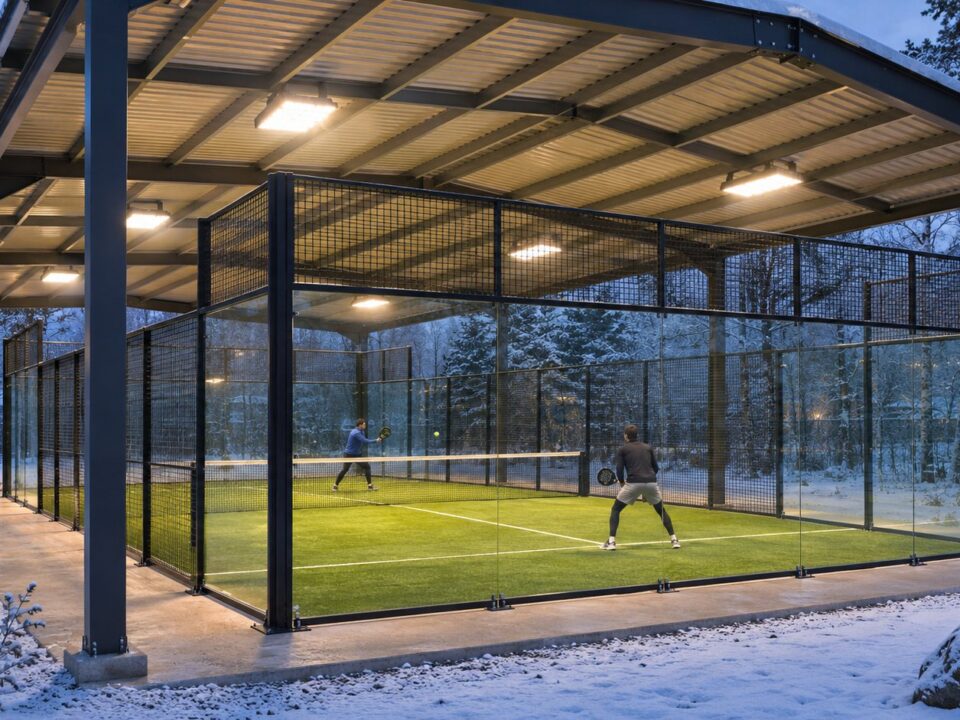
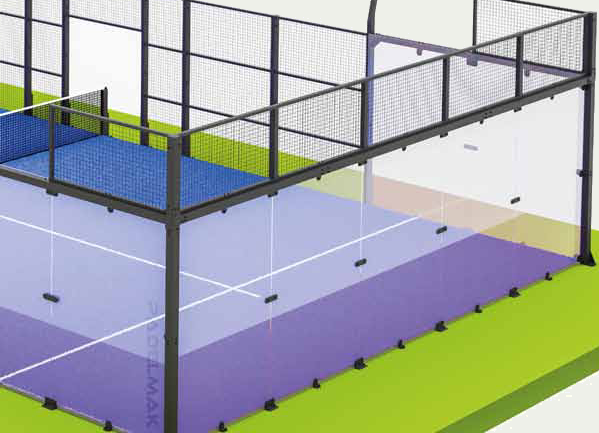
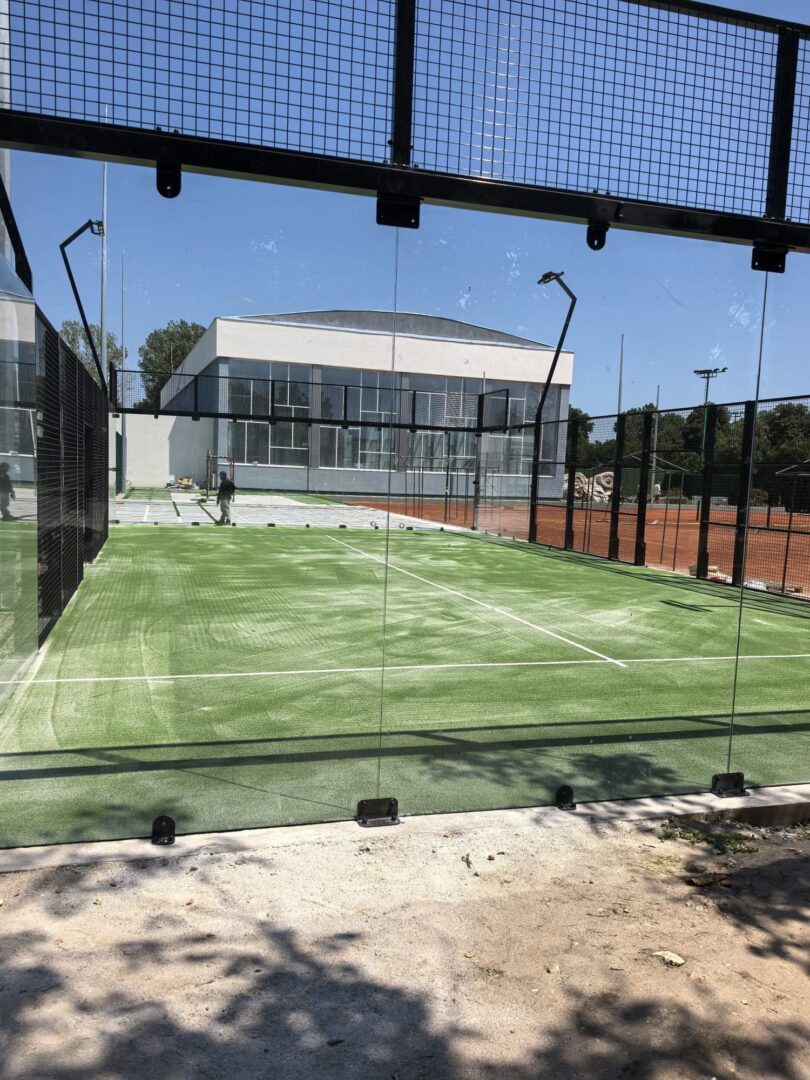
In a hotel the court is also a display piece: it gets photographed and used in marketing. That is why panoramic and fully panoramic models stand out in hospitality; the uninterrupted glass gives players and spectators an open view and the court reads as more spacious. In multi-court properties a common approach is to build most courts as classic and one as panoramic. The models are compared here.